Common Ground Farm and Retreat

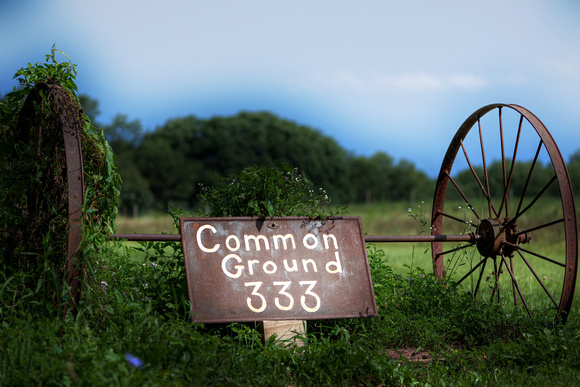
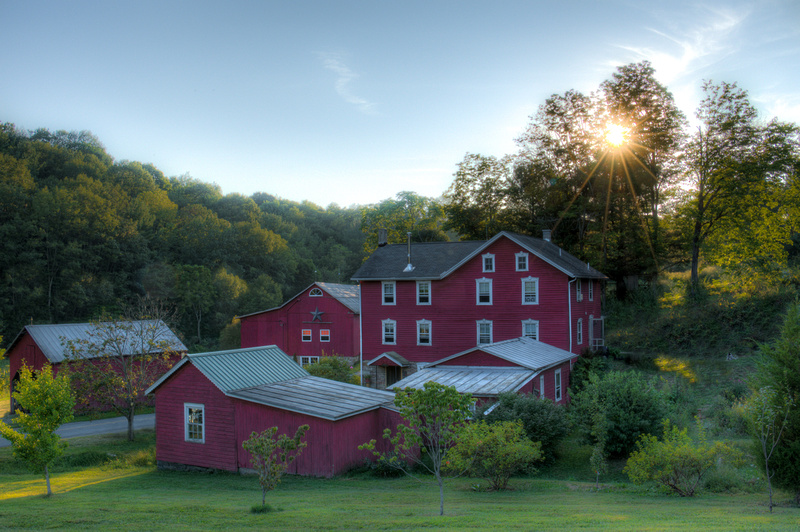
I soon learned after meeting Carrie that she was living with Mike and Lindy Sheridan, who had recently moved to Kempton, a small village not far from where I lived. They had relocated from Philadelphia to a quiet, rolling 50-acre farm with a simple but compelling dream: to create a retreat space they called Common Ground Farm and Retreat.

The farm itself felt like an exhale. Tucked away from the noise and urgency of everyday life, it was intentionally shaped to provide rest, care, and healing through a variety of retreat experiences. Some were self-guided, inviting solitude and reflection; others were structured group gatherings designed to walk people through seasons of loss, transition, and renewal. Common Ground existed for those standing at life’s crossroads—people navigating endings, beginnings, and the difficult spaces in between.

As I began to understand the vision unfolding on that small farm, something in me stirred. I recognized it almost immediately: this was something I could connect with. I, too, was moving through a season of profound change, and the relationships forming there felt unexpectedly safe and deeply comforting. There was no pressure to explain everything or to have answers—only an invitation to show up as you were.

It soon became clear that Carrie and I were kindred spirits in that sense—two people emerging from very difficult life transitions, discovering new purpose by giving ourselves to something larger than our own stories. In serving the growing vision of Common Ground, we found healing happening quietly, almost incidentally, as we worked alongside others.

It was there that I was able to contribute in a tangible way, offering my culinary gifts to support ongoing retreats and gatherings. Food became a language of care—meals prepared thoughtfully, shared slowly, and received gratefully around long tables. Over time, Common Ground also became the gathering place for a growing house church, a small community shaped by shared meals, honest conversation, and a deep desire to walk together with authenticity and faith in Christ and a growing love for this community at large.

This season at Common Ground became far more than a chapter of healing—it quietly reshaped the way I understood my work and, eventually, my livelihood. What began as simply offering meals in support of retreats slowly revealed something deeper: food had become a form of pastoral care. It wasn’t just nourishment; it was presence, hospitality, and attentiveness to people in fragile moments.

Preparing food for retreat guests required listening—learning dietary needs, emotional states, and the unspoken weight people carried with them onto the farm. Meals weren’t rushed or transactional. They were intentionally paced, thoughtfully prepared, and served with an awareness that everyone at the table was in some kind of transition. I watched how a well-prepared meal could lower defenses, create space for conversation, and foster a sense of being seen and cared for.

As retreats and gatherings increased, so did the clarity that this way of cooking—deeply personal, relational, and responsive—was something I could carry beyond the farm. The work at Common Ground helped me recognize that my culinary skills were not separate from my life story; they were shaped by it. My years in ministry, combined with this season of shared vulnerability and service, were converging into something new.

This was the soil in which my personal chef business began to take root. I wasn’t interested in simply cooking for clients—I wanted to serve people in their real lives: families stretched thin, individuals navigating illness or grief, couples celebrating milestones, or those simply longing for rest around their own tables. What I had practiced at Common Ground—creating meals that honored both body and spirit—became the foundation of how I approached every client relationship.

In many ways, Common Ground taught me that my work as a personal chef would always be about more than food. It would be about care, trust, and meeting people where they are. The farm gave me a living classroom, showing me that the table could be sacred space—and that my calling could continue, just expressed through a different vocation.

Your table is definitely the centerpiece of life!

Carrie

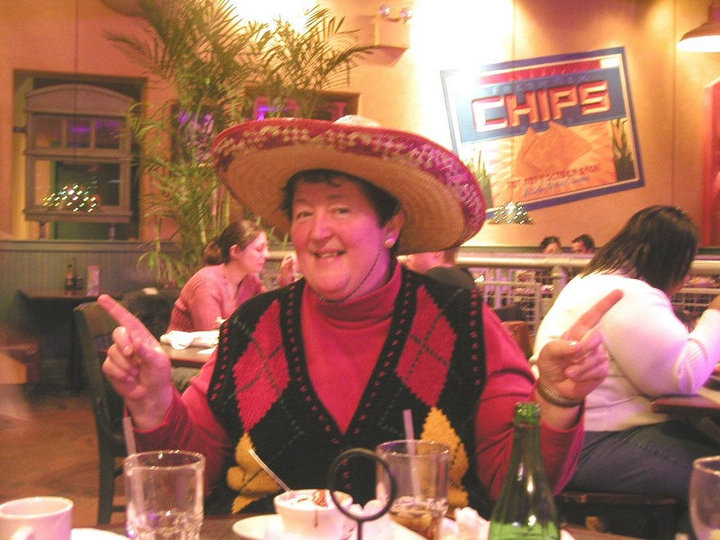
On Sunday morning, December 2, 2012, our small church was gathering as usual. I remember the date very well. Three new faces walked into the café—nothing out of the ordinary. But one of them, a woman in her fifties, came straight up to me, wrapped me in a huge hug, and said, “Hi, I’m Carrie!”

It felt like an electric charge shot through my body. I never saw it coming, and she immediately captured my attention. I soon learned that Carrie was single and living with her friends, Mike and Lindy, who had recently moved to the area from Philadelphia.

Nearly three years had passed since Jean’s death, and I was preparing to spend Christmas and New Year’s with friends in Russia, followed by a visit to others in Ukraine. The trip turned out to be a nightmare—delayed flights, long waits, and constant uncertainty. But uncertainty had become my new normal, and I was slowly adjusting to the strange rhythms of life as a single man in his early sixties.

When I returned home in late January, it felt as though Carrie had been waiting for me. Within a few days, my daughter Rebecca and I were invited to dinner at the home of Mike, Lindy, and Carrie. That evening marked the beginning of a warm and unexpected new chapter—not only with Carrie, but with the Sheridan’s as well.

We began spending more time together, and soon Carrie and I were going on dates. It was clear we were drawn to each other, and we gradually allowed those feelings to surface. Love was in the air, and for the first time in a long while, life felt like it was returning.

After months of dating and getting to know what would become my new family, we decided to marry. On December 28, 2013, a small gathering of family and friends met in my sister’s home, and the two of us became one.

Life in the Dark

Close-up of film negatives being processed in a darkroom, with red lighting and the text 'Image Processing' overlaying the image.

My life after Jean’s death became a bleak and morbid existence. There’s no gentler way to describe it. Everything felt stripped of purpose and direction. I knew I needed time away to care for myself, yet I never took it. Instead, I kept pastoring our church and managing the daily operations of Adam2 Café and its programs, moving through each day on autopilot.

Mornings were the worst. I dreaded waking up and facing another day. Evenings offered a small measure of comfort, but sleep rarely came. My body felt as if it were connected to a trickle charger—always humming, vibrating, never truly at rest.

I continued traveling to Russia with my friends during the Christmas and New Year holidays to visit their ministry house south of Saint Petersburg. Being surrounded by former street kids brought a surprising sense of grounding and comfort to my fractured emotions. I also attended my first Time of Refreshing in Switzerland without my partner of forty years. It wasn’t the same, and in hindsight, it was something I probably should have skipped altogether.

This hollow existence stretched on for more than two years. I felt like a zombie.

Early in this new and unwanted chapter, I began to write. I needed to pour my thoughts onto paper and dig deeply into the scriptures, searching for something I sensed was missing. What I was missing was freedom. I remembered Jesus’ words to the Jews: “You shall know the truth, and the truth shall set you free.”

But I was anything but free. I felt imprisoned, in trouble every hour of the day. It was as if I were constantly waiting for the other shoe to drop—or for the gun pressed against the back of my head to finally go off. Yet none of those imagined catastrophes ever came.

As I wrote each day, something profound began to happen. My writing brought comfort to my troubled mind. I started seeing things in scripture—and in life—that had been hidden from me before. It felt like developing film in a darkroom, watching faint shapes emerge into beautiful images. Those images became points of light, guiding me out of my terror.

I wrote like this for the next two and a half years. What I discovered was nothing short of extraordinary. Though I had been a Christian for decades, I realized how little I understood about the way life truly works. My writing revealed what I had been blind to. It showed me how hungry I was for truth—truth deeper and more real than anything I had known. And real hunger can only be satisfied with real truth.

The following quote became my compass:
“We routinely disqualify testimony that would plead for extenuation. That is, we are so persuaded of the rightness of our own judgment as to invalidate evidence that does not confirm us in it. Nothing that deserves to be called the truth could ever be arrived at by such means.” —Marilynne Robinson, The Death of Adam

This season revealed how naïve I had been throughout my life—how unaware I was of the suffering of others, how self‑absorbed and disengaged I had become. Strangely enough, this painful awakening was a gift, delivered to me in the dark.

Jean’s Death

Life was moving along smoothly. We were enjoying our family, pastoring, developing the Adam2 Center, and traveling with the Kaisers for the annual Time of Refreshing in Switzerland.

We were celebrating our great-nephew’s birthday—he was born on the Fourth of July. Jean was carrying the birthday cake she had made, as she always did. It wasn’t one of her best creations; the decorations were messy. More concerning, though, was the way she was walking. Something wasn’t right.

The next day we decided to take her to the emergency room. From there, she was admitted to the hospital. The diagnosis was cancer—cancer that had metastasized to several organs, including her brain, causing swelling.

On July 6, 2009, we were told she had seven months to live. There are no words that can truly describe what a moment like that feels like. Life, as you know it, comes to a sudden and violent stop. The months that followed that were like living in a nightmare that wouldn’t stop. My wife of forty years was leaving us.

Seven months later, at her funeral, I spoke about what we call death. To us as humans, it is known as death. But to those of us who are in Christ, it is actually being swallowed up by Life. In as much as it’s necessary to make the transition from this life to the next, it can be a painful process. Our certainly was.

“For we know that if the earthly tent we live in is destroyed, we have a building from God, an eternal house in heaven, not built by human hands… so that what is mortal may be swallowed up by life.”
— 2 Corinthians 5:1–5

The Adam2 Center had been operating for about five years, and now I was single. I had never been single. Being married at nineteen is not the same as suddenly being alone. So what do you do? I did the only thing I knew how to do—I kept pastoring the church and running the nonprofit.

Every day was exhausting. Every day felt pointless.

That exhausting, empty existence continued for the next two and a half years. I kept pastoring. I kept traveling—mission trips to Russia and Ukraine, and of course, Time of Refreshing with the Kaisers. I needed someone to pull the plug on my endless activity, but there was no one to do that.

Until December 2, 2012.

That’s when I met Carrie.

It was memorable, to say the least.