Moving to Ann Arbor, Michigan

I never pictured myself living in Michigan. Honestly—why would I?

Of all the places on the map, Michigan was never on my list. I can’t even give you a solid reason. Chalk it up to one of those unconscious biases you carry around without realizing it. Growing up in Pennsylvania had its perks, but it also came with a narrow frame of reference. Somewhere along the way, I decided Michigan was the kind of place you lived only if you were born there and had no choice in the matter.

Turns out, I was in for a surprise. And surprises, by definition, don’t announce themselves.

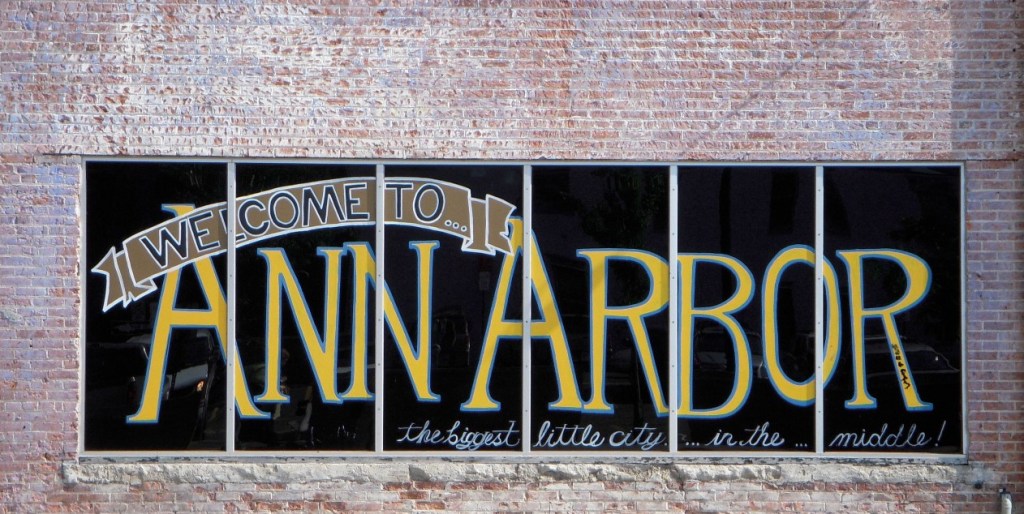
From what I knew of Ann Arbor, it seemed like a promising place to launch my personal chef venture. “Tree Town” has its own charm—home to the University of Michigan, Domino’s Pizza, and Borders Books, just to name a few. Add in a rich mix of cultures and you get a small city with an unmistakably intellectual, artsy vibe. Tree-lined neighborhoods, bike lanes, bookstores, coffee shops, and independent restaurants give it a relaxed yet cultured feel. It’s no wonder it consistently ranks among the most livable cities in the country.

But three weeks after we arrived, Covid-19 shut everything down. Overnight, the vibrancy of this community faded to black. For the next two years, my work revolved around recipe development and picking up jobs wherever I could.

I joined Katherine’s Catering on the west side of town. Up until early March 2020, business was booming—then the virus wiped out nearly half of it. I helped develop menus for home-delivered meals, because that’s all anyone could do. Weddings, parties, gatherings—gone. “Heart of the Home” was born out of necessity, and it kept the company afloat for a while. But eventually, the economy couldn’t sustain it, and I was laid off.

After some time, Sur La Table began reopening their cooking classes in Arbor Hills. I stepped in as an instructor and found myself energized by the challenge—prepping ingredients, organizing equipment, and teaching groups ranging from two to sixteen. The prep could be stressful, but the teaching was a joy.

Meanwhile, Z’Chef sat dormant until September 2021. Then I met my first client, and my personal chef career took flight again. I was encouraged—thrilled, really. The community I had hoped would embrace my style of cooking finally did. One client became two, then three, and the momentum continued.

Since then, I’ve cooked for intimate dinners, large catered events, and weekly meal deliveries for clients across the area. Six years in, I can say without hesitation that this place—this city and region I once dismissed—has become a genuine joy to me. It’s home.
Launching Z’Chef PCS

Suddenly the light bulb came on—why not start a business doing what I loved?

Launching the business in 2017 was exciting, though not especially lucrative. In truth, it was a slow and somewhat pale beginning. The area simply didn’t support a personal chef business. This was my home turf, the region where I had grown up, and the Pennsylvania Dutch culture prized self-sufficiency. People cooked for themselves, and they cooked well. Looking back, I never actually researched whether personal chefs existed in Berks County, but I suspect there weren’t many. The food culture I was moving toward just didn’t quite fit the place I came from.

My time creating menus at Adam2 Café and traveling had expanded my palate and imagination. I had discovered a world full of flavor and possibility, and it was clear I was heading in a different direction than my kinsfolk. I had been raised on simple fare—meat and potatoes, honest and good food—and there is nothing wrong with that. But I always found myself curious about what lay beyond the familiar. Food became a way to explore the world and satisfy a deeper hunger to learn and experience something new.

To my surprise, shortly after officially forming my LLC, I landed my first client. He was a very wealthy man who lived alone and wanted me to cook for him regularly. I still remember standing in his kitchen during that first visit, pausing in the middle of my work just to take in the moment—what I was doing and where I was doing it. Maybe the grammar of the thought wasn’t perfect, but the feeling certainly was. It was an awesome moment for me.

Soon, other opportunities followed. I began catering private dinners for an affluent clientele—bankers, lawyers, and others who appreciated the experience I was offering. It was rewarding work and an eye-opening glimpse into a small demographic that valued good food prepared well. For a time, I had found my place, and I was their guy to deliver the goods.

This continued for about two years. Alongside the private work, I was still cooking at Common Ground for retreats and special events. Yet despite the satisfaction of the work, it never quite provided for us financially the way we had hoped. It all felt like a dream that had not fully taken shape.

Then everything changed.

Carrie was offered a job in Whitmore Lake, Michigan, just twenty minutes from Ann Arbor. Our long-term plan had been to move there eventually to help care for her mother, who had been widowed for two years, but that move wasn’t supposed to happen for another three years. Life, however, had other plans. By February of 2020, we were packing up and heading to Michigan.

Three weeks after we arrived in Ann Arbor, the world shut down because of COVID-19.

It was a strange and unsettling time. Almost overnight, life as we knew it changed completely.

You know the rest of that story. . . . !#?

Common Ground Farm and Retreat

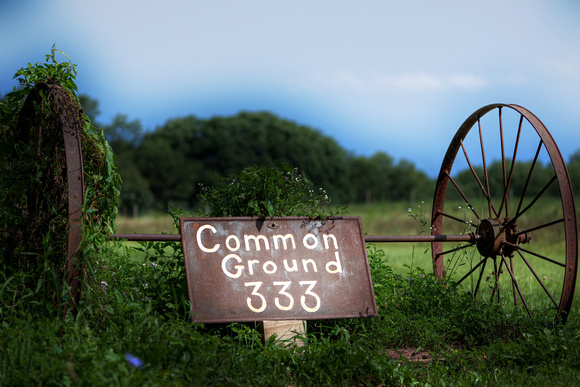
I soon learned after meeting Carrie that she was living with Mike and Lindy Sheridan, who had recently moved to Kempton, a small village not far from where I lived. They had relocated from Philadelphia to a quiet, rolling 50-acre farm with a simple but compelling dream: to create a retreat space they called Common Ground Farm and Retreat.

The farm itself felt like an exhale. Tucked away from the noise and urgency of everyday life, it was intentionally shaped to provide rest, care, and healing through a variety of retreat experiences. Some were self-guided, inviting solitude and reflection; others were structured group gatherings designed to walk people through seasons of loss, transition, and renewal. Common Ground existed for those standing at life’s crossroads—people navigating endings, beginnings, and the difficult spaces in between.

As I began to understand the vision unfolding on that small farm, something in me stirred. I recognized it almost immediately: this was something I could connect with. I, too, was moving through a season of profound change, and the relationships forming there felt unexpectedly safe and deeply comforting. There was no pressure to explain everything or to have answers—only an invitation to show up as you were.

It soon became clear that Carrie and I were kindred spirits in that sense—two people emerging from very difficult life transitions, discovering new purpose by giving ourselves to something larger than our own stories. In serving the growing vision of Common Ground, we found healing happening quietly, almost incidentally, as we worked alongside others.

It was there that I was able to contribute in a tangible way, offering my culinary gifts to support ongoing retreats and gatherings. Food became a language of care—meals prepared thoughtfully, shared slowly, and received gratefully around long tables. Over time, Common Ground also became the gathering place for a growing house church, a small community shaped by shared meals, honest conversation, and a deep desire to walk together with authenticity and faith in Christ and a growing love for this community at large.

This season at Common Ground became far more than a chapter of healing—it quietly reshaped the way I understood my work and, eventually, my livelihood. What began as simply offering meals in support of retreats slowly revealed something deeper: food had become a form of pastoral care. It wasn’t just nourishment; it was presence, hospitality, and attentiveness to people in fragile moments.

Preparing food for retreat guests required listening—learning dietary needs, emotional states, and the unspoken weight people carried with them onto the farm. Meals weren’t rushed or transactional. They were intentionally paced, thoughtfully prepared, and served with an awareness that everyone at the table was in some kind of transition. I watched how a well-prepared meal could lower defenses, create space for conversation, and foster a sense of being seen and cared for.

As retreats and gatherings increased, so did the clarity that this way of cooking—deeply personal, relational, and responsive—was something I could carry beyond the farm. The work at Common Ground helped me recognize that my culinary skills were not separate from my life story; they were shaped by it. My years in ministry, combined with this season of shared vulnerability and service, were converging into something new.

This was the soil in which my personal chef business began to take root. I wasn’t interested in simply cooking for clients—I wanted to serve people in their real lives: families stretched thin, individuals navigating illness or grief, couples celebrating milestones, or those simply longing for rest around their own tables. What I had practiced at Common Ground—creating meals that honored both body and spirit—became the foundation of how I approached every client relationship.

In many ways, Common Ground taught me that my work as a personal chef would always be about more than food. It would be about care, trust, and meeting people where they are. The farm gave me a living classroom, showing me that the table could be sacred space—and that my calling could continue, just expressed through a different vocation.

Your table is definitely the centerpiece of life!