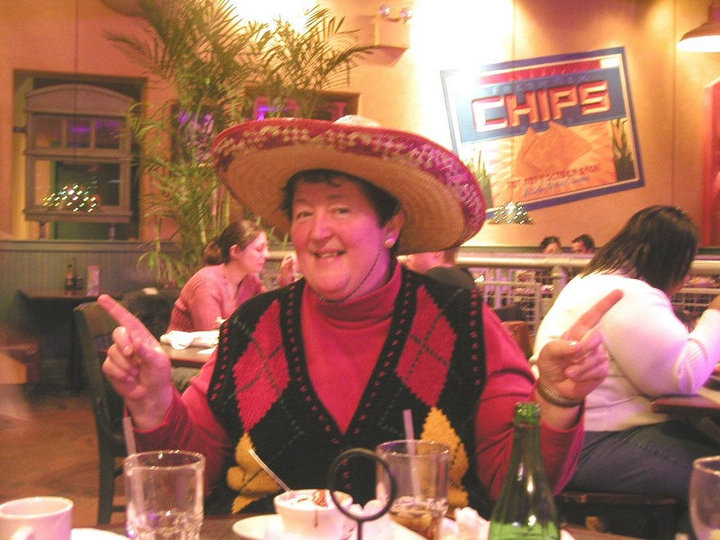
Carrie

On Sunday morning, December 2, 2012, our small church was gathering as usual. I remember the date very well. Three new faces walked into the café—nothing out of the ordinary. But one of them, a woman in her fifties, came straight up to me, wrapped me in a huge hug, and said, “Hi, I’m Carrie!”

It felt like an electric charge shot through my body. I never saw it coming, and she immediately captured my attention. I soon learned that Carrie was single and living with her friends, Mike and Lindy, who had recently moved to the area from Philadelphia.

Nearly three years had passed since Jean’s death, and I was preparing to spend Christmas and New Year’s with friends in Russia, followed by a visit to others in Ukraine. The trip turned out to be a nightmare—delayed flights, long waits, and constant uncertainty. But uncertainty had become my new normal, and I was slowly adjusting to the strange rhythms of life as a single man in his early sixties.

When I returned home in late January, it felt as though Carrie had been waiting for me. Within a few days, my daughter Rebecca and I were invited to dinner at the home of Mike, Lindy, and Carrie. That evening marked the beginning of a warm and unexpected new chapter—not only with Carrie, but with the Sheridan’s as well.

We began spending more time together, and soon Carrie and I were going on dates. It was clear we were drawn to each other, and we gradually allowed those feelings to surface. Love was in the air, and for the first time in a long while, life felt like it was returning.

After months of dating and getting to know what would become my new family, we decided to marry. On December 28, 2013, a small gathering of family and friends met in my sister’s home, and the two of us became one.

Life in the Dark

Close-up of film negatives being processed in a darkroom, with red lighting and the text 'Image Processing' overlaying the image.

My life after Jean’s death became a bleak and morbid existence. There’s no gentler way to describe it. Everything felt stripped of purpose and direction. I knew I needed time away to care for myself, yet I never took it. Instead, I kept pastoring our church and managing the daily operations of Adam2 Café and its programs, moving through each day on autopilot.

Mornings were the worst. I dreaded waking up and facing another day. Evenings offered a small measure of comfort, but sleep rarely came. My body felt as if it were connected to a trickle charger—always humming, vibrating, never truly at rest.

I continued traveling to Russia with my friends during the Christmas and New Year holidays to visit their ministry house south of Saint Petersburg. Being surrounded by former street kids brought a surprising sense of grounding and comfort to my fractured emotions. I also attended my first Time of Refreshing in Switzerland without my partner of forty years. It wasn’t the same, and in hindsight, it was something I probably should have skipped altogether.

This hollow existence stretched on for more than two years. I felt like a zombie.

Early in this new and unwanted chapter, I began to write. I needed to pour my thoughts onto paper and dig deeply into the scriptures, searching for something I sensed was missing. What I was missing was freedom. I remembered Jesus’ words to the Jews: “You shall know the truth, and the truth shall set you free.”

But I was anything but free. I felt imprisoned, in trouble every hour of the day. It was as if I were constantly waiting for the other shoe to drop—or for the gun pressed against the back of my head to finally go off. Yet none of those imagined catastrophes ever came.

As I wrote each day, something profound began to happen. My writing brought comfort to my troubled mind. I started seeing things in scripture—and in life—that had been hidden from me before. It felt like developing film in a darkroom, watching faint shapes emerge into beautiful images. Those images became points of light, guiding me out of my terror.

I wrote like this for the next two and a half years. What I discovered was nothing short of extraordinary. Though I had been a Christian for decades, I realized how little I understood about the way life truly works. My writing revealed what I had been blind to. It showed me how hungry I was for truth—truth deeper and more real than anything I had known. And real hunger can only be satisfied with real truth.

The following quote became my compass:
“We routinely disqualify testimony that would plead for extenuation. That is, we are so persuaded of the rightness of our own judgment as to invalidate evidence that does not confirm us in it. Nothing that deserves to be called the truth could ever be arrived at by such means.” —Marilynne Robinson, The Death of Adam

This season revealed how naïve I had been throughout my life—how unaware I was of the suffering of others, how self‑absorbed and disengaged I had become. Strangely enough, this painful awakening was a gift, delivered to me in the dark.

Jean’s Death

Life was moving along smoothly. We were enjoying our family, pastoring, developing the Adam2 Center, and traveling with the Kaisers for the annual Time of Refreshing in Switzerland.

We were celebrating our great-nephew’s birthday—he was born on the Fourth of July. Jean was carrying the birthday cake she had made, as she always did. It wasn’t one of her best creations; the decorations were messy. More concerning, though, was the way she was walking. Something wasn’t right.

The next day we decided to take her to the emergency room. From there, she was admitted to the hospital. The diagnosis was cancer—cancer that had metastasized to several organs, including her brain, causing swelling.

On July 6, 2009, we were told she had seven months to live. There are no words that can truly describe what a moment like that feels like. Life, as you know it, comes to a sudden and violent stop. The months that followed that were like living in a nightmare that wouldn’t stop. My wife of forty years was leaving us.

Seven months later, at her funeral, I spoke about what we call death. To us as humans, it is known as death. But to those of us who are in Christ, it is actually being swallowed up by Life. In as much as it’s necessary to make the transition from this life to the next, it can be a painful process. Our certainly was.

“For we know that if the earthly tent we live in is destroyed, we have a building from God, an eternal house in heaven, not built by human hands… so that what is mortal may be swallowed up by life.”
— 2 Corinthians 5:1–5

The Adam2 Center had been operating for about five years, and now I was single. I had never been single. Being married at nineteen is not the same as suddenly being alone. So what do you do? I did the only thing I knew how to do—I kept pastoring the church and running the nonprofit.

Every day was exhausting. Every day felt pointless.

That exhausting, empty existence continued for the next two and a half years. I kept pastoring. I kept traveling—mission trips to Russia and Ukraine, and of course, Time of Refreshing with the Kaisers. I needed someone to pull the plug on my endless activity, but there was no one to do that.

Until December 2, 2012.

That’s when I met Carrie.

It was memorable, to say the least.

Tabernacle Church

The first gathering of what would become Tabernacle Church took place on Sunday, September 11, 1988. We were an ambitious group of believers who chose to walk together, though our beginning was shaped by difficult and unexpected circumstances.

Following our resignation from Victory Christian Center, a faithful remnant chose to step into an unknown future with us. In those early days, we met in our home until we were able to secure space in one of the theater-style classrooms at Kutztown University. For a season, we moved from classroom to classroom, searching for something more permanent.

After many months without a place of our own, we finally found a storefront. There, the church took root and flourished in its early years. What followed was a wide range of experiences—some joyful, others deeply painful. While the church never grew large in numbers, what we lacked numerically was more than compensated for in other ways. We were, without question, a family.

It would be impossible—and unnecessary—to recount every detail here, so for the sake of this blog, I’ll focus on a few pivotal moments that help explain how I arrived where I am today.

In April of 1996, Jean and I joined our dear friends Bill and Emogene Kaiser as part of their team that traveled to various locations around the world, hosting conferences for American missionaries. Time of Refreshing was a three-day gathering held in the missionaries’ regions, offering rich times of worship, generous gift-giving, and shared meals. It was an extravagant expression of love, encouragement, and honor for those serving abroad.

We continued this for fifteen years, logging countless miles and being immersed in cultures across Europe, the Middle East, and Southeast Asia. At the time, we didn’t realize how profoundly this exposure—to people, cultures, and cuisines—would shape us. It cultivated a deep love for diverse foods and an even deeper love for God, while also transforming how we understood the church.

Our missionary friends introduced us to the unconventional—new expressions of ministry that stretched our imagination. A desire to walk a less-traveled road began to grow in our hearts. It felt as though we were being rewired for something different, something altogether unfamiliar.

Then, in December of 2004, Adam2 Ministries was born—not out of a church split, but from a deep, inward calling to share the gospel of Jesus Christ in a tangible, lived-out way.

Pennsylvania Homecoming!

We returned to Pennsylvania the summer of 1986. It was amazing to us how we were conditioned by 10 years of Florida’s humidity. In other words, despite Pennsylvania’s hot humid summer, we were very comfortable!

Once again, we were in search of a home. We lived in my mother’s small camping trailer parked on True Life Family Acres, a ministry began by my sister and husband, Carl. It was a community comprised of people who moved in with the Madtes family for personal care. Carl was on the faculty of a local school and met lots of troubled children coming from difficult family situations. Occasionally he would bring them to his home to stay for the weekend. Then the weekends grew into weeks, and the weeks became months. Some became family. True Life became an extension of that care and the property was dedicated to create a family for all ages combining young with the elderly.

During that time, I got a job working at a small logging operation. Yes, you heard me correctly! I was harvesting hardwood trees and cutting logs into lumber at the saw mill a few miles away from our camper home. It reminded me of my job at the box factory in Florida – hard work! I continued working at the lumber mill for about a year when Jean, Rebecca and I relocated to the Fleetwood area.

Around that time, I began working for MetLife selling life insurance and securities. Interesting, right? Cooking, box making, ministry, logging – and now selling life insurance! What can I say? It paid the bills and put food on the table.

Jean had started to bake wedding cakes for everybody and anybody. She was a baker at heart. Her dad bought her a Kitchen Aid mixer as a gift which I still use today 48 years later.

While working for MetLife we started to attend a local church in nearby Kutztown. After a few months passed, the pastor and his wife decided to leave that work and establish a new congregation in nearby Allentown. They appointed us as the new pastors of the ministry in Kutztown and I preached my first message on Easter Sunday in 1988. Things were going well until the former leaders decided to return to take over the work in Kutztown because of problems that closed their new plant in Allentown.

Needless to say, this created a whole new set of problems with Victory Christian Center’s congregation and our role as their new pastor. After four months of serving in this new role, we were bonding with the congregation and strong relationships were forming. But the only thing we could do was to resign from our position and move on with the next step.

I remember seeking counsel from my ordaining body back in Florida and after sharing our predicament with Gerald Derstine, his counsel was clear. His advice was this; if the people were looking to us as their pastors, separate yourself from the church and let the people decide what they wanted.

By the following week, we had 95 percent of Victory Christian Center sitting in our house asking questions about the future. I don’t advise starting a church this way, but this was to become the beginning of Tabernacle Church.

Frostproof, Florida

The three of us moved into a small community on the west side of Frostproof. It was our first home purchase situated along highway 27, a main route north and south through Florida’s heartland. Citrus groves, large expanses of cattle ranches and phosphorous strip mining characterized Frostproof and its surrounding area.

Frostproof Tabernacle had seen better days when we arrived. It was a beautiful structure on 12 acres of prime real estate located on the shore line of Lake Clinch. The congregation dwindled to a total of eight people; eleven if you included the three Zettlemoyers. Needless to say, we had our work cut out for us there in more ways than we could anticipate.

It amazed us as we learned how this culture and community was stuck in time. The two elders of the church referred to people of color using the word that began with an “N”! It was an uphill battle to win the hearts and trust of our new congregation. The church had a history that also put it in a negative light in the community. So, for the first few months, it felt like “us against them”.

Despite this atmosphere, the church began to grow and continued to do so up to the time we left there. My father died in the summer of 1984 and I was feeling a stir to return to Pennsylvania.

There were some bright spots in our lives beyond our family in Frostproof. Floridians know how to cook! We learned all sorts of wonderful dishes there from sweet tea to wild turkey and pigs. Beyond these recipes, we discovered classic dishes like fried chicken, buttermilk biscuits, shrimp and grits, collard greens, and barbecue. Red snapper, grouper, shrimp, scallops, and stone crab—are staples, often grilled, blackened, or in paella. Looking back, I can see how my love for Latin American food has its roots in central Florida.

After ten years in Florida, we decided to return to our own roots and family in Pennsylvania.

Christian Retreat – Life in community

Christian Retreat Conference Center, located just east of Bradenton, Florida, spans 110 acres of paradise carved from wild orange groves along the Manatee River, which winds its way to the Gulf of Mexico. More than a conference center, it is a vibrant blend of community, ministry, and family church life.

After completing the Institute of Ministry, we returned to Christian Retreat in January 1977. With only a few hundred dollars, a car payment coupon book, and all our possessions packed into one vehicle, we arrived hopeful—longing for connection and a place to call home.

We found it, though not without some wandering. For a time, we bounced from house to house across the sprawling campus before finally settling into our own space. God’s faithfulness was evident in every step, guiding us through one experience after another. For brevity’s sake, I’ll share just the highlights.

Jean quickly secured a position in the center’s kitchen as the new baker, while I sought work off campus. Tropicana’s massive plant in Bradenton hired me into their box factory. Each day, our three-man crew clocked in at 6:30 a.m. and labored until 3:00 p.m., producing nearly 100,000 cartons for orange juice. The pace was relentless—machines cranking out 200 boxes every minute. It was grueling, far beyond what I had imagined, and I never expected to work so hard.

By God’s mercy, after two months of box-making I transitioned back to Christian Retreat, joining Jean in the kitchen. My duties ranged from washing dishes and cleaning restrooms to stocking vending machines across campus.

When the dining services director stepped down, a new leader arrived. Upon meeting the kitchen crew, he immediately appointed me his first cook. Though I had no real culinary training, I accepted the role. To my surprise, I discovered a natural aptitude for cooking. Under Fred’s leadership, I was soon recognized as head cook, while Jean continued her amazing baking. Together, we became a strong team, and the kitchen thrived.

Eventually, Fred’s lifestyle proved incompatible with the Christian community, and he was released. Responsibility for dining services fell to Jean and me. Overnight, we were in charge of the entire operation—cooking, baking, and managing staff. I didn’t known I was capable of such work, but with Jean by my side, we flourished.

But I was wrestling with pride. I believed the culinary world was beneath me, convinced I was destined for “greater” things—ministry. I imagined God’s Kingdom as a ladder, with rungs to climb toward higher callings. That attitude was misguided, yet God’s grace prevailed.

In 1979, I was ordained into the ministry and within weeks, I joined the pastoral staff at Christian Retreat, serving alongside Gerald Derstine and four other pastors. My responsibilities shifted dramatically—from cooking meals to coordinating conferences, and concert schedules filled with world-renowned speakers and artists.

During those years, I met believers from across the Christian world—Pat Boone, Tom Netherton, Anita Bryant, the Continental Orchestra and Singers, Costa Dier, Charles and Francis Hunter, Benny Hinn, and many more.

Our daughter, Rebecca, was born one very stormy morning on May 12th, 1980. What an amazing joy she brought into our lives.

Then, in the summer of 1981, we moved to central Florida to pastor our first church in the small town of Frostproof. The transition was jarring—like stepping from the frying pan into the fire. Rural central Florida felt worlds away from anything familiar, like we had left the country altogether.


Christian Retreat – Bradenton, Florida

After completing an intensive 10-week program at the Institute of Ministry, Jean and I returned to Pennsylvania, where I resumed my position at Gaumer’s Plumbing Supply on Allentown’s south side. I remained there for another year and a half.

Gaumer’s was a humble, one-man operation run by Homer Gaumer—a man whose presence was as impactful as his work ethic. Working alongside him felt like earning a graduate degree in both life and faith. Homer had a remarkable way of weaving spiritual insight into the rhythm of our daily tasks, and I absorbed invaluable lessons from him—professionally and spiritually.

About a year after my return, tragedy struck. Homer suffered a fatal heart attack on his way to work. In the aftermath, I stepped in to manage what remained of the business, doing my best to keep it going. But as the months passed, the financial burden grew heavier, and it became clear that continuing was no longer sustainable. Eventually, Gaumer’s Supply closed its doors.

With that chapter behind us, Jean and I turned our eyes once again to Florida.

In January 1977, we packed everything we could into our 1975 Volvo—roof rack overflowing, $400 in cash, and a car payment coupon book tucked in the glove box—and headed south. We had no job lined up, no place to stay, and no one at Christian Retreat expecting us. We didn’t even have a hotel reservation. Still, we believed God would provide. That faith carried us—at least for the first three days.

By the third day, doubt crept in. With no job, no permanent housing, and dwindling funds, we began to question whether we had misunderstood God’s direction. We packed up, ready to return to Pennsylvania while we still had the means.

Before leaving, we decided to say goodbye to Gerald Derstine. We found him working on the platform in the sanctuary. After we shared our situation and plans to leave, he encouraged us to stay, assuring us that things would work out. He even offered us a temporary room in his home. Just then, the person in charge of housing rentals on the conference grounds happened to walk by. After a brief conversation, we learned that a mobile home had just become available—for two weeks. We gratefully accepted.

Two days later, Jean found a job in the conference center’s kitchen. It wasn’t what we expected, but it was exactly what we needed.